


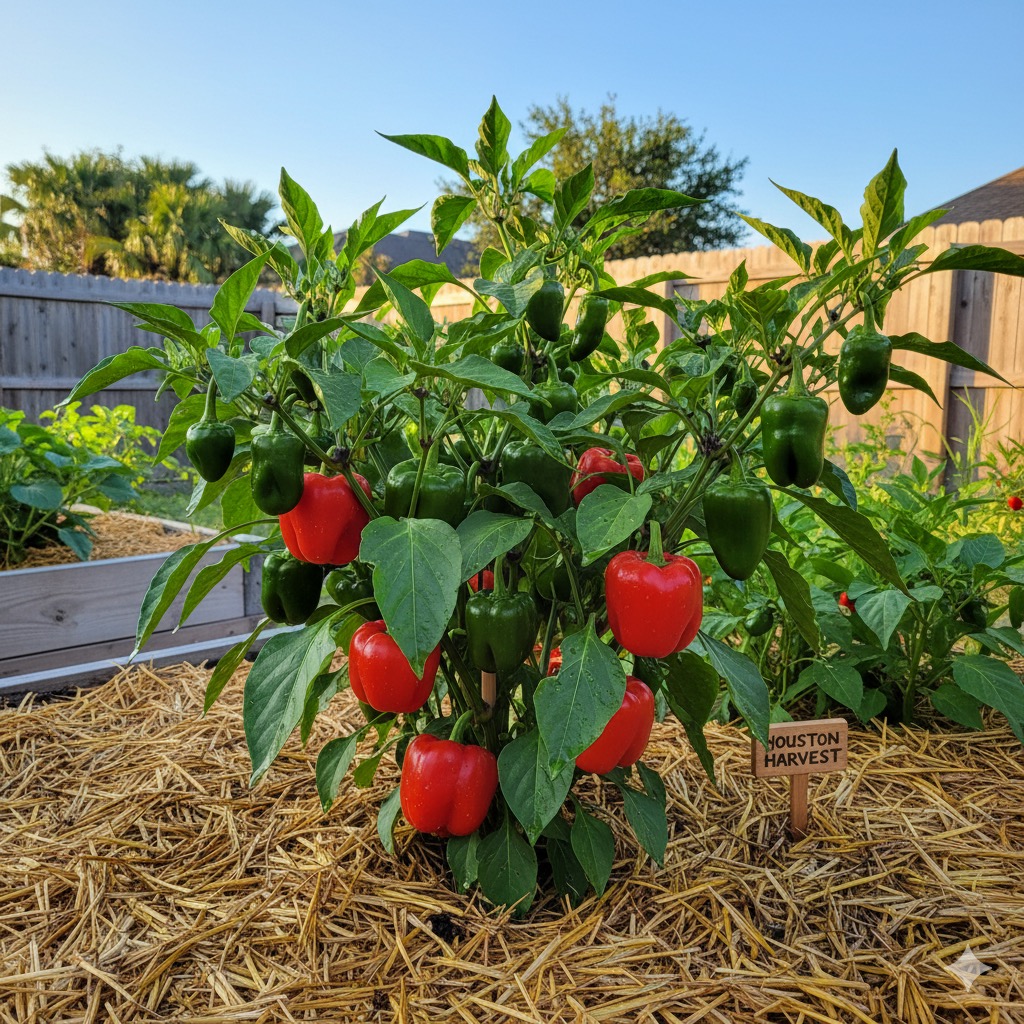
If you live in Houston, you know that our weather is… well, it’s a character all on its own. We don’t have four seasons; we have two summers, a wet season, and about three weeks of “winter” scattered randomly between November and February.
Gardening here isn’t like gardening in the Midwest or the Northeast. If you follow the instructions on the back of a seed packet from a big-box store, you are likely setting yourself up for heartbreak. I’ve learned this the hard way, watching beautiful transplants wither in the humid embrace of a July afternoon or rot in the heavy clay “gumbo” soil after a torrential May downpour.
But here is the good news: Houston is actually a pepper paradise.
If you get the timing right, you can harvest peppers not just for a few weeks, but for nearly six months of the year. Peppers love our long, warm days. The trick isn’t just knowing how to plant them; it’s knowing when to make your move.
Let’s break down the optimal timeline for growing everything from sweet bells to face-melting ghost peppers in Zone 9a/9b.
The Golden Rule: The “Two-Season” Mindset
To be a successful gardener in the Gulf Coast, you have to abandon the idea of a single growing season. In Houston, we have two distinct windows for peppers:
1. The Spring/Summer Crop: Planted in March, harvested May–July.
2. The Fall Revival: Planted (or revived) in late August, harvested October–December.
Most people plant in spring, get a harvest, watch their plants stop producing in August, and assume the season is over. That is a rookie mistake. The best peppers I have ever tasted came out of my garden in November.
Phase 1: The Spring Start (Starting from Seed vs. Transplants)
The biggest debate in the gardening community is whether to start your own seeds or buy transplants.
The Case for Seeds (and the Timeline)
If you want specific varieties—like the Datil, Lemon Drop, or specific strains of Thai chilies—you have to start from seed. Nurseries usually stock the basics (Jalapeño, Habanero, Bell, Poblano), but the exotic stuff is up to you.
The Timeline:
Peppers are slow starters. They are not like tomatoes which shoot up overnight.
• Late December to Mid-January: This is when you start pepper seeds indoors. Yes, while you are taking down Christmas decorations, you should be planting peppers.
• The Setup: You cannot start these on a windowsill. Houston winter days are too short and often too gray. You need a grow light and, crucially, a heat mat. Pepper seeds need soil temperatures between 80°F and 85°F to germinate. Without heat, they will sit in the dirt and rot.
The Case for Transplants
If you are just looking for a solid harvest of Jalapeños for salsa or Bells for salads, save yourself the headache and buy transplants. Wait for the local nurseries (Buchanan’s, Cornelius, Wabash, etc.) to put them out.
The Critical Window: When to Put Them in the Ground
This is where the rubber meets the road.
The Average Last Frost Date for Houston is roughly mid-February to early March. However, “average” is a dangerous word in Texas. We have had freezes in mid-March.
The Sweet Spot: March 15th – April 1st
I aim for March 15th as my target date to move peppers into the garden.
• Too Early (Late Feb/Early March): The soil is still cool. Peppers hate cool feet. If the soil temp is below 60°F, the plants will stunt. They won’t die, but they will sit there sulking for a month, refusing to grow. You gain nothing by rushing.
• Too Late (May): If you wait until May to plant, your plants won’t have established a large enough root system before the brutal July heat arrives.
Expert Tip: Watch the 10-day forecast like a hawk around March 10th. If the lows are consistently above 50°F at night, it’s go-time.
The “Summer Slump” (Don’t Panic)
This is a phenomenon that baffles new Houston gardeners. You plant in March. The plants look amazing in April. You get a massive harvest in May and June.
Then, July hits.
The temperatures soar to 95°F+ during the day and, more importantly, stay above 75°F at night. When this happens, pepper plants enter survival mode. They will drop their blossoms. You will see flowers fall off without producing fruit.
This is called “Pollen Sterilization.” The pollen basically cooks inside the flower.
What to do:
1. Do NOT fertilize heavily. You don’t want to push new growth when the plant is stressed.
2. Water deeply. Keep the roots alive.
3. Mulch heavily. 3-4 inches of straw or pine bark to keep the root zone cool.
4. Wait.
Do not pull the plants out! They are not dead; they are dormant.
Phase 2: The Fall Revival (The Secret Harvest)
This is my favorite time of year.
around mid-to-late August, the temperatures start to dip just slightly—especially at night. This signals the pepper plants to wake up.
The Pruning Technique
In late August, I go out to my raggedy-looking summer pepper plants and I prune them.
• I cut them back by about 1/3.
• I remove any dead branches or yellowing leaves.
• I hit them with a dose of high-quality organic fertilizer (something balanced, or slightly higher in phosphorus).
planting New Transplants for Fall
If you didn’t plant in spring, or your spring plants died, you can plant new transplants in late August or very early September. These plants will grow rapidly in the warm soil and start producing fruit by late October.
The Reward:
From October through the first freeze (usually December), your peppers will go crazy. The fruit produced in the fall is often sweeter and thicker-walled than spring fruit because it matures in cooling temperatures rather than rising heat.
Understanding Varieties for Houston
Not all peppers are created equal, especially in our humidity.
1. Sweet Peppers (Bells and their Cousins)
Standard Bell Peppers can be tricky here. They are prone to sunscald (sunburn) and rot.
• Try this instead: ‘Giant Marconi’ or ‘Carmen’. These are Italian roasting peppers. They are sweet, huge, and incredibly productive in Houston heat. They outperform Bells 10 to 1.
• Gypsy Peppers: These are reliable producers that yield yellowish-green fruit that turns red.
2. Hot Peppers (The Heat Lovers)
Chili peppers generally handle Houston weather better than sweet peppers. They originated in hot climates.
• Jalapeños: The ‘TAM’ variety is milder; ‘Early’ varieties are better for our quick spring window.
• Habaneros / Scotch Bonnets: These love our humidity. While tomatoes are dying in August, Habaneros are thriving. They need a long season, so they are perfect for that November harvest.
• Thai Chilies / Bird’s Eye: These are practically weeds. You can’t kill them. One plant will provide enough heat for a year of curry.
3. The Super Hots (Ghost, Reaper, Scorpion)
If you are into pain, you are in the right city. Super hots require very warm nights to set fruit. Houston provides this in spades. Just be warned: they take forever to ripen. You might be harvesting these well into December.
Soil Preparation: The “Gumbo” Problem
We cannot talk about planting in Houston without talking about the soil. If you dig a hole in your backyard and stick a pepper in it, it will likely drown. We have heavy clay soil that holds water like a bathtub.
Peppers hate “wet feet.”
The Solution: Raised Beds or Containers
I grow 90% of my peppers in raised beds or 5-gallon grow bags.
• Raised Beds: Ensure your mix is loose. I use a mix of 1/3 compost, 1/3 peat moss (or coconut coir), and 1/3 expanded shale or vermiculite for drainage.
• Containers: Peppers do famously well in pots. A 5-gallon pot is sufficient for one plant. This also gives you the ability to move them into the shade during the August death-heat, or into the garage during a freeze.
Fertilizer Needs
Peppers are moderate feeders.
1. At Planting: Mix in a slow-release organic fertilizer and a handful of bone meal (for calcium).
2. First Flower: When you see the first blossoms, hit them with a liquid fertilizer (like fish emulsion or a seaweed mix).
3. Magnesium: Peppers love magnesium. If leaves look yellow but veins are green (chlorosis), dissolve 1 tablespoon of Epsom salts in a gallon of water and spray the leaves. It works like magic.
Troubleshooting: Pests and Problems
Growing in the tropics means tropical pests.
• Aphids: They will come in spring. They cluster on the new growth. Solution: Blast them off with a strong hose stream. If that fails, Neem oil works, but don’t spray Neem when the sun is out or you will fry the leaves.
• Leaf-Footed Bugs: These are the devil. They look like stink bugs with flared legs. They pierce the fruit, causing cloudy spots and rot. Solution: Hand-picking. It’s gross, but it’s the only way. Drop them in a bucket of soapy water.
• Sunscald: If your peppers look like they have a bleached white patch on the skin, it’s sunburn. Solution: Don’t over-prune your leaves! The leaves provide the umbrella for the fruit. If you have sparse foliage, use a shade cloth in July/August.
A Note on Harvest and Preservation
One of the most common questions I get is: “When do I pick them?”
Green vs. Red (or Orange/Yellow)
almost all peppers start green. You can eat them green (like a green Bell or green Jalapeño). However, if you leave them on the plant, they will eventually turn their mature color.
• Flavor: Mature peppers (red/orange) are sweeter and usually have a more complex heat profile. Green peppers are more vegetative and grassy.
• Production Signal: If you pick peppers green, the plant thinks, “Oh no, I lost my babies!” and tries to make more. It increases yield. If you let them turn red, the plant thinks, “Job done,” and slows down production.
• My Strategy: I pick green early in the season to encourage growth, and let them ripen to red in the Fall for the best flavor.
Conclusion: The Joy of the November Pepper
There is something incredibly satisfying about harvesting a basket of bright red, fiery peppers in late November, just as the rest of the country is bracing for snow.
Gardening in Houston is a wild ride. It’s hot, it’s sticky, and the bugs are prehistoric. But when you slice into a crisp, home-grown pepper that was fueled by that intense Texas sun, you realize it’s all worth it.
Start your seeds in January, transplant in March, nurse them through August, and enjoy the bounty in October.
Happy Planting, y’all.